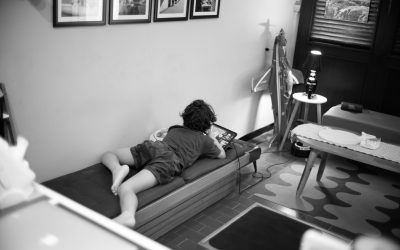
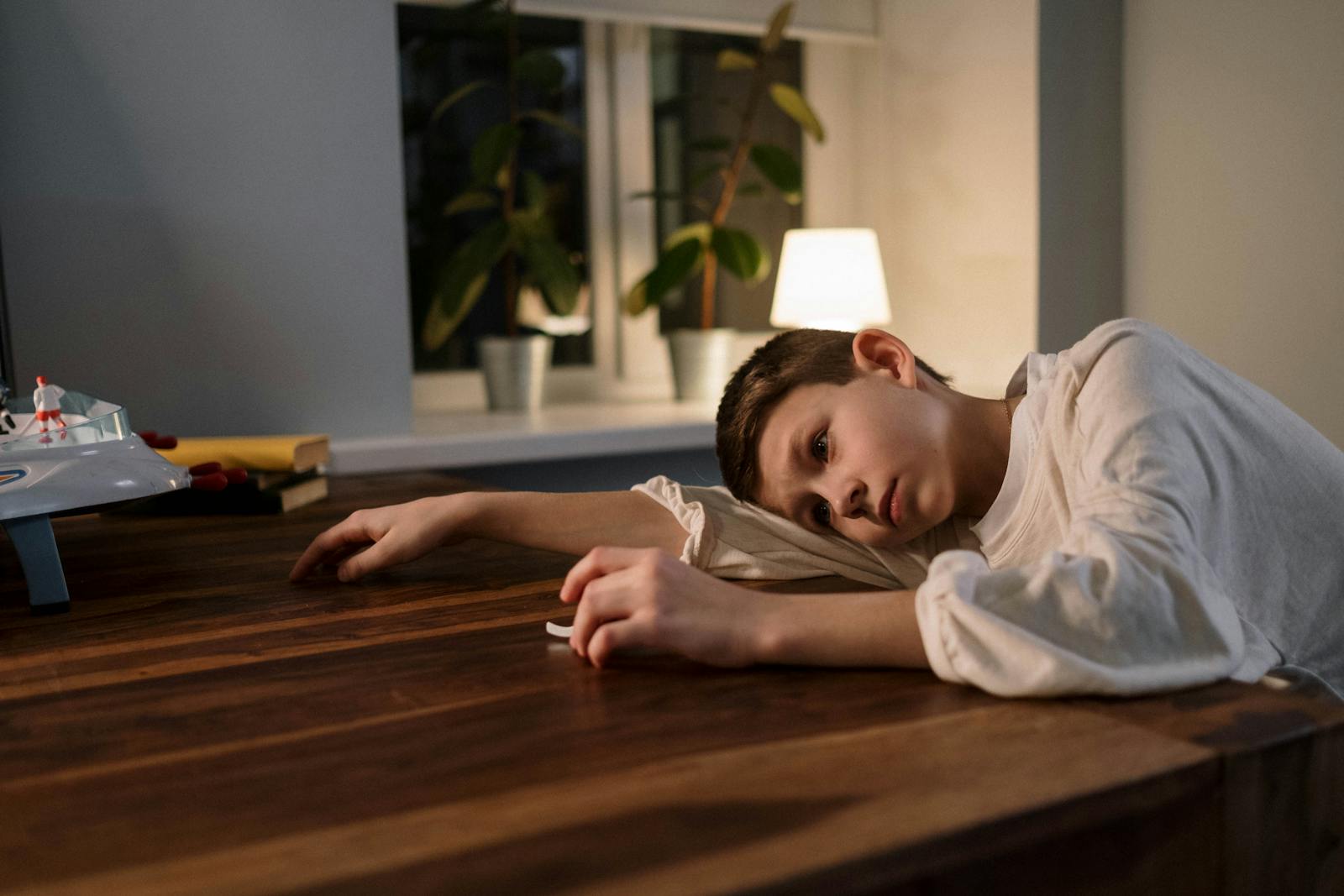
If your kid falls apart the moment they’re not being entertained, you’re not imagining it. Most kids can’t handle boredom the way they used to, and this shift has happened fast. A generation ago, a boring Sunday afternoon meant children invented something to do. Now, two minutes without a screen and you’ve got a complaint, a meltdown, or a child staring at you like you’ve personally wronged them.
This isn’t a personality flaw. It’s not laziness. And it’s not a sign you’ve done something wrong. It’s what happens when a brain gets wired to expect constant stimulation. Here’s what’s actually going on, and what you can do about it.
Why Kids Can’t Handle Boredom the Way They Once Could
Boredom tolerance is like a muscle. Use it regularly and it gets stronger. Don’t use it, and it weakens.
For most children today, that muscle hasn’t been exercised much. Waiting rooms come with phones. Car trips come with tablets. Even mealtimes often have something running in the background. The spaces where boredom used to live have been filled in, one by one, over the past decade.
When a child has never had to sit with boredom for more than thirty seconds, the feeling itself becomes intolerable. Not because they’re weak. Because they’ve never had the chance to discover it passes.
It’s worth naming this clearly: this is a structural problem, not a parenting failure. The devices your child uses are engineered by large teams of people whose job is to make them as engaging as possible. You’re not fighting laziness. You’re up against deliberate design.
What’s Actually Happening in the Brain
When kids watch fast-moving content on YouTube or play games built around constant reward, their brains release dopamine. Not a small amount. A significant amount, delivered at a pace the brain finds genuinely hard to walk away from.
The real world doesn’t deliver dopamine at that pace. A Lego set, a book, a game of backyard cricket. These all take a few minutes to warm up. There’s an entry cost before the enjoyment kicks in. For a brain trained to expect instant stimulation, that entry cost feels enormous.
Researchers who study attention and self-regulation describe this as a mismatch problem. The brain isn’t broken. It’s calibrated to an environment that no longer matches the one it spends most of its time in. Real life feels flat by comparison, and that flatness registers as boredom.
This is why so many kids reach for a screen within seconds of putting one down. It’s not that something is clinically wrong with them. It’s that the contrast between screen stimulation and everything else has never been greater, and the brain is simply doing what brains do: gravitating toward the highest available reward.
What Boredom Intolerance Looks Like at Home
You probably don’t need a checklist. But it helps to name the pattern clearly, because once you recognise it, it’s easier to respond to rather than react to.
Boredom intolerance tends to show up as:
- “I’m bored” within thirty seconds of putting down a device
- Irritability or low-level aggression when unstructured time kicks in
- Activities that used to work (bikes, drawing, outdoor play) no longer generating any interest
- Needing you to solve the boredom problem rather than finding something independently
- Complete inability to settle into anything without a screen nearby
None of this means your child is broken or that something has gone irreversibly wrong. It means their boredom tolerance has dropped, and that’s something you can rebuild. Gradually, with a consistent approach.
Why This Matters Beyond the Obvious
It would be easy to write this off as a comfort issue. Who cares if a kid can’t sit still for ten minutes without something to watch?
Here’s why it matters. A child who can’t tolerate boredom is also a child who finds it harder to:
- Focus on schoolwork that isn’t immediately interesting
- Tolerate the frustration of learning something new and being bad at it initially
- Wait without escalating
- Sit through conversations that don’t move fast
- Generate their own ideas and follow them through
Boredom tolerance is the foundation of patience, focus, and creativity. When it’s low, you see the effects in the classroom, in friendships, and in how your child handles anything that requires sustained effort. This isn’t a screen time problem in isolation. It’s a whole-child problem, and it’s worth taking seriously.
If you want to understand how screen use connects to your child’s behaviour and focus more broadly, the Screen Time Guide for Primary School Kids covers the full picture.
What You Can Actually Do About It
The goal is to rebuild boredom tolerance gradually. Not through punishment, and not through a dramatic ban. Through consistent, manageable exposure to unstructured time where your child has to generate their own interest.
Start with short windows, not long ones. If your child currently can’t manage five minutes without a screen, don’t start with an hour. Start with ten minutes. Be matter-of-fact about it: “The next ten minutes are screen-free. You’ll figure out something to do.” Then leave them to it. Don’t suggest activities. Don’t entertain them. Let the boredom sit.
Resist the urge to fill the gap. When your child says “I’m bored,” the natural response is to help. But solving the boredom for them teaches them that boredom always needs fixing from the outside. A better response: “I know. See what you come up with.” Then walk away. It feels uncomfortable. That discomfort is the point.
Create predictable screen-free routines. Not as punishment. As structure. “After school until dinner is screen-free in this house” works better than a daily negotiation. Children adapt to predictable expectations faster than they adapt to arbitrary ones. Once it’s just how things are, the resistance drops significantly.
Let them be bad at it for a while. The first few times you hold a screen-free window, your child will be irritable, unimaginative, and vocal about it. That’s normal. What you’re watching is a weak muscle starting to work again. It gets easier within one to two weeks if you hold the routine without backing down.
Don’t fill screen-free time with organised activities. Signing them up for extra classes misses the point. The goal is genuinely unstructured time where the child has to generate their own interest. That’s where boredom tolerance, creativity, and self-direction actually develop. Empty time is not wasted time. It’s where a lot of the good stuff happens.
Notice what changes. Most parents who hold this routine for two weeks report that their children start settling into activities faster, complain less, and seem genuinely more content during unstructured time. The muscle rebuilds. It just needs a few weeks of consistent holding.
Model it yourself. If your child watches you reach for your phone every time there’s a quiet moment, they’re learning that boredom always gets solved by a screen. Sitting with a few minutes of nothing, reading a book, or doing something with your hands sends a different message. It doesn’t need to be dramatic. Just visible.
Practical Takeaway
This week, introduce one ten-minute screen-free window every day. Pick a consistent time. After school, after dinner, whatever fits your household. Don’t explain it as a punishment. Don’t fill it with suggestions. When your child says “I’m bored,” respond with “I know. You’ll figure something out,” and leave the room.
Hold it every day for a week and notice what’s different by day five. Most parents are genuinely surprised. The complaining drops. Something gets picked up off the floor. A conversation starts. That’s the muscle waking up.
One change. Ten minutes. Seven days. That’s the whole ask this week.
For personalised guidance on helping your child handle boredom and screens, try Cleo free at lifereadyparenting.com/ask-cleo.