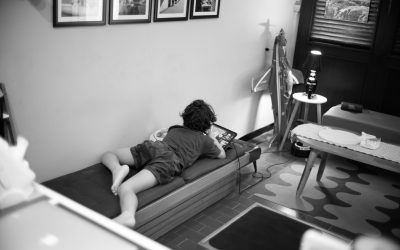
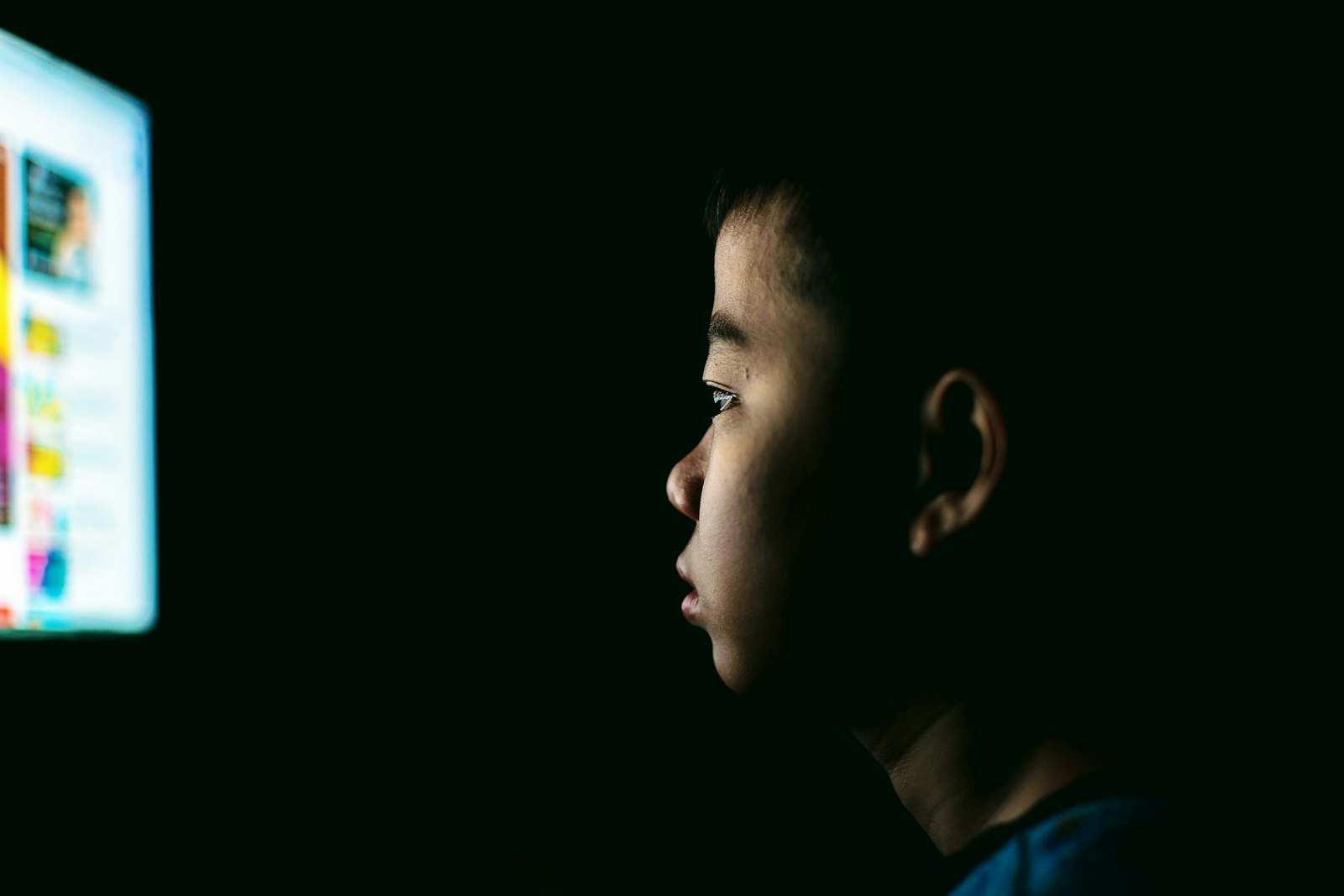
The signs of too much screen time are not about the number on the clock. They are a set of behaviours the screen is crowding out. The child who stops sleeping properly, who gets irritable at transitions, who forgets how to play alone, who drops out of family conversation. That is when you know the screen time has slipped into territory worth resetting.
This article walks you through the five areas where too much screen time shows up first: sleep, mood, the body, friendships, and school. If you are seeing several of these, this is not a parenting failure. It is worth a reset.
## Why hours alone are a poor measure of signs of too much screen time
The parenting internet loves a number. Two hours a day for school-age kids. Ninety minutes for younger children. These numbers circulate everywhere, and then parents spend energy trying to hit them.
The trouble is that two hours of background TV while playing with Lego is genuinely different from two hours of TikTok. A better question than “how many hours?” is “what is the screen replacing?” If it is replacing sleep, that is a problem. If it is replacing friendship, that is a problem. If it is replacing movement, concentration, or the ability to sit with boredom, that is a problem.
This is why the specific signs matter more than the total. Watch for the behaviours that shift.
## Sleep signs to watch for
Sleep is often the first place screen time shows up. Watch for these patterns. The child takes longer to fall asleep than they used to. They wake in the night more often. They are harder to wake in the morning or wake very early and are groggy. They say they are tired all the time.
If you are seeing a visible shift from their baseline, if they used to fall asleep easily and now they do not, that is your signal. Often, the screen time shifted first, and the sleep followed.
Blue light suppresses melatonin. Engaging content activates the brain right when the child is supposed to be quieting down. If screens are anywhere near bedtime, this is your easiest intervention point.
## Mood and transition signs
The second sign is usually mood, especially around transitions.
Watch for the child who is calm while screens are on, but becomes snappy or whiney the moment they are asked to stop. Watch for the child who reacts to small frustrations with big feelings. Watch for flatness in their interactions with family, then a flare of emotion if you ask them to do something else.
A typical pattern: the child is home from school and gets some screens. They seem fine. The hour is up. You turn it off. The next thirty minutes are whining, complaints, rudeness, or tearfulness over small things. Once they are engaged in something else, they settle.
This is the child’s nervous system struggling with the transition. Screens create a neurological state that is hard to leave.
## Physical signs
Look for these. The child’s posture is drooping. Their eyes are strained. They complain of headaches. They are sitting for much longer stretches without moving. They are snacking mindlessly while screens are on. They have not ridden their bike or done anything physical that they used to enjoy.
None of these is dramatic on its own. But if several are happening together, or if you are seeing a shift from their baseline, it is worth noticing.
## Social signs
Watch your child in rooms with other people, especially family.
Are they present? Do they talk? Do they notice what is happening around them, or are they half-present? Do they engage with siblings or want to be together?
A child with too much screen time often shows a flatter affect in social situations. They are quieter. They do not make as much eye contact. They seem less interested in the conversation.
Sometimes this shows up as withdrawal. The child used to want to hang out with you and now they do not. Both of these are signals. The child’s social battery is being drained by the screen time.
## School and attention signs
This one is often picked up by the child’s teacher first.
The child is struggling to concentrate on tasks that require sustained attention. They are forgetting instructions. They lose focus quickly. They seem tired in class. Their work used to be careful and now it is rushed.
Screen time does not cause ADHD, but it does train the brain to expect constant novelty. A sheet of maths problems offers neither. If the screen time is heavy enough, the child’s capacity for sustained attention actually does degrade.
## How many signs are too many?
Seeing one or two signs does not mean you need to overhaul everything. But if you are ticking off several of these boxes, or if you are seeing multiple signs across different categories, that is your signal.
If sleep is worse AND mood is flatter AND they are less social AND school is reporting attention changes, you are not looking at one isolated problem. You are looking at a pattern.
## What to do if you see signs of too much screen time
First, the reassurance: you are not failing. Screen time is engineered to be compelling, and kids are kids. The fact that you are noticing the signs means you can act on them.
Start with one area. If sleep is the biggest problem, start there. If mood is the issue, focus on transitions. Do not try to reset the entire week at once.
Often the most effective intervention is not cutting screen time in half, but moving it away from the hour before bedtime, or creating a specific transition routine when screens end, or setting up an alternative activity.
## FAQ
**Can screen time actually affect my child’s mood?**
Yes. The neurological state required for screen engagement is quite different from the one required for face-to-face connection. Children often struggle with the transition out of that screen state, which shows up as irritability, and can deepen into baseline mood changes if the screen time is heavy.
**What if my child only shows one or two of these signs?**
One or two signs do not necessarily signal a problem. But if you are seeing the same one or two signs consistently over weeks, or if you are seeing several signs across different categories, it is worth a conversation and maybe a small experiment with timing or access.
**Is it ever too late to fix screen time problems?**
No. Even children who have been heavily reliant on screens for quite some time usually show changes within a week or two of a real reset. Sleep improves first, mood follows, and social engagement picks back up.
**Can reduced screen time really help my child’s attention at school?**
Yes, particularly if heavy screen use was training the brain to expect novelty every few seconds. When that input slows down, attention span tends to recover quite fast. Most parents see changes within two to three weeks of a consistent reset.
If you are seeing several of these signs, here is how to reduce screen time without banning it. And when you need ideas for what comes after screens, our guide to screen free activities for bored kids has options by age group. For a complete walkthrough, see our screen time guide for primary school kids.
If you want a tailored plan to reset your child’s screen time and address the specific signs you are seeing, chat with Cleo. She is a free screen time specialist who will ask you the right questions and walk you through your first move. Find her at [lifereadyparenting.com/ask-cleo](https://lifereadyparenting.com/ask-cleo).