
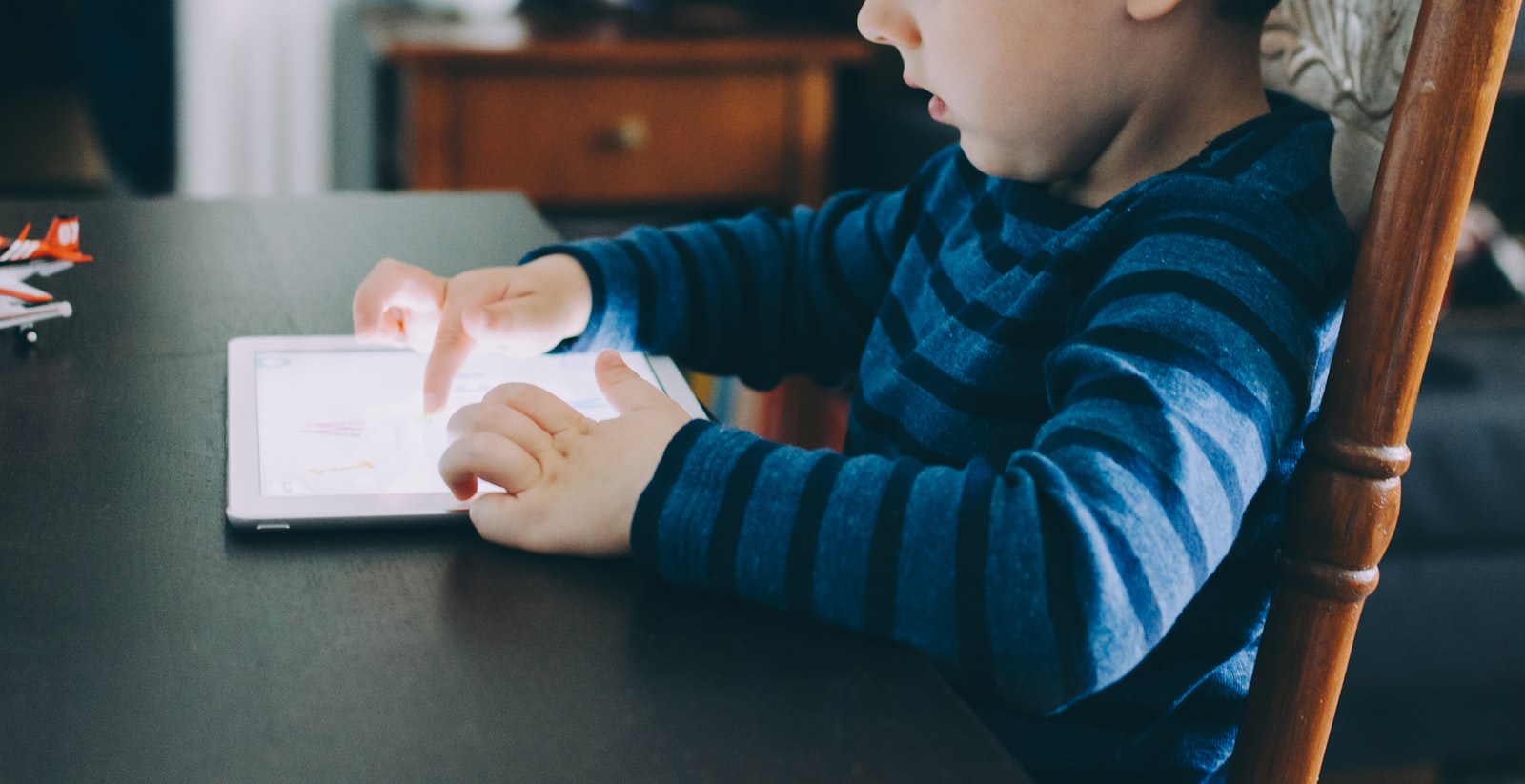
Screen time is changing childhood in ways most parents have not had time to notice. The shifts are real, gradual, and difficult to see when you are inside them. None of this is your fault, but knowing what is happening makes it much easier to do something about it.
This is not a list of scary statistics or a piece about banning screens. It is a calm, honest account of what has actually shifted in childhood over the last decade, and what parents can do at home to push back against the parts that matter most.
The screen time shift no one warned us about
The current generation of primary school children is the first in human history to grow up with on-demand, personalised, infinite content available from before they could walk. There is no earlier generation to compare against. There are no long-term studies because the technology has not been around long enough.
What we do have is the lived experience of parents and teachers who can compare childhood now to childhood ten or fifteen years ago. The shifts they describe are consistent. They are not catastrophic. But they are real.
What has changed in the average child’s day
Attention
Teachers across primary schools in Australia, the UK, the United States, and Canada report that the average child’s capacity to sustain focus on a single task has measurably reduced. Not in every child. Not in dramatic ways. But the trend is consistent across countries and age groups.
The likely cause is the dominant content format children are exposed to. Short video, particularly the 15-to-60-second format used by the most popular platforms, trains the brain to expect a new stimulus every few seconds. Over months and years, this changes the level of stimulation the brain treats as baseline. Anything below that level feels boring. Reading. Listening. Drawing. Conversation.
This is not a permanent rewiring. The brain is plastic. The capacity for sustained attention can be rebuilt through exposure to slower-paced content and screen-free time. But it does require active reclamation.
Boredom
The average child today has fewer experiences of being genuinely bored than a child a decade ago. This sounds harmless until you consider what boredom does. Boredom is the engine that drives a child to invent a game, ask a question, daydream, or notice the world around them. Children who never experience real boredom miss the developmental work that boredom enables.
The relevant change is not just total hours of screen time. It is that there is now no waiting time in modern childhood. Five minutes in a queue, a car ride, the moments before dinner is ready, the time between activities, all of it used to be where boredom did its quiet work. Now those moments are filled with a screen.
Conversation
Children learn vocabulary, social cues, humour, listening skills, and the entire architecture of human conversation through thousands of small interactions with the people who love them. The dinner table, the car ride, the walk to school, bedtime, the in-between moments. When devices fill those moments, the interactions do not happen.
The cumulative effect across a childhood is not always visible at age seven or nine. It tends to show up later. A teenager who struggles to sustain a real conversation. A young adult who finds eye contact uncomfortable. None of this is determined at primary school age, but the patterns that lead there are set then.
Sleep
The blue light from screens disrupts the production of melatonin. The content itself, particularly short video and gaming, activates the nervous system in ways that make settling for sleep harder. A child who scrolls in bed for thirty minutes before sleep starts the night in a state of mild physiological alertness.
The compound effect over months shows up as low-level tiredness, increased irritability, difficulty focusing at school, and quietly declining mood. Most parents do not connect these symptoms to screens because the screen use itself looks calm.
Identity
This is the most subtle shift, and the most important. A child’s identity is built through experience. Through trying things, failing at things, slowly becoming good at things. A child who spends most of their free time consuming content rather than experiencing the world develops a thinner sense of who they are.
They know what they like to watch, but not always what they like to do. They know which characters or creators they follow, but not always what they themselves are interested in. The space where personality is supposed to grow gets quietly filled by something else.
None of this is your fault
The platforms your child uses are not neutral. They employ thousands of people whose job is to make those platforms more engaging. They run thousands of experiments every week, testing tiny changes that increase the time users spend on the screen. Every design choice, from the autoplay video to the algorithmic feed, is the product of relentless optimisation toward one goal. More time on screen.
This is not a fair fight. A primary school child’s developing prefrontal cortex is no match for a system designed by behavioural scientists with billion-dollar budgets. Telling them to “just put it down” is like telling them to outrun a car.
That is why the willpower-based approach to screen time fails for almost every family. You are not asking your child to make a choice. You are asking them to win a battle they were set up to lose.
What helps, quietly and reliably
The work of pushing back is not dramatic. It is not a 30-day digital detox or a cabin in the woods. It is small, consistent decisions that slowly shift the family rhythm.
- Reclaim one moment, not all of them. Pick one moment in the day. Make it screen-free. Protect it for two or three weeks. Then add another.
- Replace, do not just remove. A screen-free moment needs something specific in its place. A walk. A conversation question. A board game. The replacement is what makes the change last.
- Set the environment, not the willpower. Devices do not live in bedrooms. Chargers are in the kitchen. The dinner table is screen-free for everyone. Once the environment is right, the daily decisions stop being decisions.
- Use the right words, not the right rules. The exact sentences you say in the moment matter more than the rule itself. Calm, prepared, repeated. The fight ends much faster.
- Hold the line for two weeks. The first week is the hardest. The second week is easier. By the third week, the new pattern is the default.
What this work is really about
None of the shifts above are catastrophic on their own. Most of them are reversible with reasonable, sustained effort. The point of naming them is not to alarm you. It is to give you back the framing that the slow drift is real, that you have noticed it because it is happening, and that you are not the problem.
The real opponent is not your child. It is not your parenting. It is a system designed at industrial scale to capture attention. Once you see that clearly, the work stops feeling like a personal failure and starts feeling like what it actually is. A quiet, ongoing, completely doable project of reclaiming the parts of your child’s life that have been gradually filled in by something else.
The bigger picture of why this work matters is in the Let’s Get Them Back manifesto. The full set of tools sits in the Complete Guide to Screen Time.
Frequently Asked Questions
How is screen time changing childhood?
The most consistent shifts are in attention span, the experience of boredom, family conversation, sleep, and the slow building of identity. None of these are catastrophic on their own, but they compound. The good news is that they are reversible with reasonable, sustained effort.
Is screen time really damaging my child?
The honest answer is: probably not in dramatic ways, but yes in slow ones. The effects on attention, sleep, and family connection are real and measurable. Reclaiming a few key moments in the day reverses most of them within weeks.
Are some kinds of screen time worse than others?
Yes. Short video format is the most concerning, because it trains the brain to expect constant novelty. Long-form content, video calls with family, and educational content cause less measurable harm. Gaming sits in the middle, depending on the type.
What age group is most affected?
Primary school years (5 to 12) are the most important window. The patterns set during these years carry into adolescence. Children under five who have heavy screen use also show effects. Teenagers can recover but the work is harder.
Will my child fall behind socially if we cut screens?
No. Children who have less screen time have more time for real-world social interaction, which is the foundation of social development. The fear of “missing out” on group chats and online culture is real but smaller than parents assume. Most children adjust within weeks.
What if it feels too late?
It is not. The brain is plastic at every age. Older children take a little longer to recalibrate, but every family that puts in consistent effort sees a noticeable change within a month. The first move is choosing one screen-free moment and protecting it.