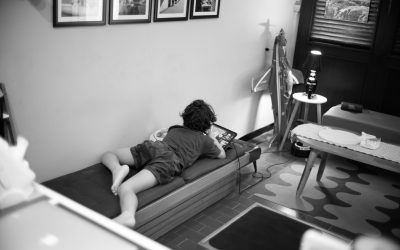
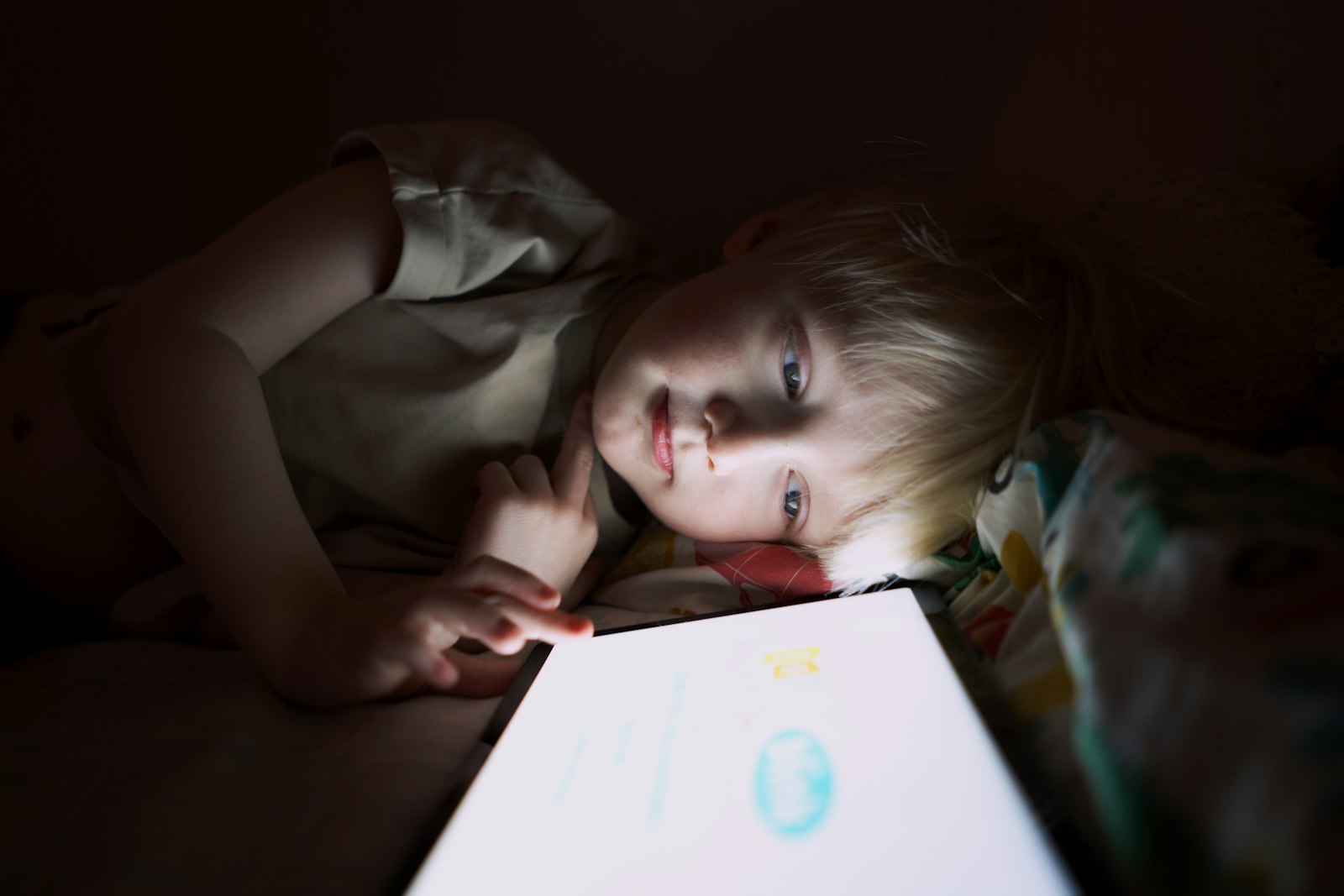
Screen time before bed disrupts sleep more than most parents realise. Your child is wired, it’s 9pm, and they’ve been on screens for the last two hours. Tomorrow they have school. Tonight they will not sleep well. This is not accidental, and it is not because your kid is unusual. Screens before bed disrupt sleep in three distinct ways, and understanding those three mechanisms changes how you handle the evening.
The good news: you do not need to ban screens entirely. You need to understand what screens actually do to sleep, then build a plan that stops that disruption without turning bedtime into a battle.
## How screen time before bed disrupts your child’s sleep
Most parents have heard that screen light affects melatonin, the hormone that tells the brain it is time to sleep. That is true, and it matters. But it is only one part of the story. Screens disrupt sleep through three mechanisms, and most bedtime screen problems are not solved by addressing just the first one.
The first mechanism is light. The blue light from screens suppresses melatonin production. Your child’s brain reads this light as “it is still daytime” and postpones the sleep signal. This is real and measurable.
The second mechanism is content stimulation. Screens are designed to hold attention. When a kid is scrolling through videos, playing a competitive game, or watching a show that has genuine stakes, their nervous system is in an activated state. Their heart rate is higher. They are alert. This is not relaxation. This is winding up. Getting them from wound-up to asleep takes longer, and the sleep that follows is less restorative.
The third mechanism is time displacement. The simplest and most underestimated one. If your child is on screens until 8:45pm, they do not fall asleep until 9:20pm or later. That is forty-five minutes of sleep lost, right there. Add that across a week and you are looking at five or six hours of sleep displacement.
Most parents know about the light. Some know about the stimulation. Almost no one factors in time displacement until they see the clock.
## The 60-minute rule and why it works
Here is what works: screens off sixty minutes before sleep.
This is not arbitrary. Sixty minutes gives your child time to wind down from stimulation, to move into a genuinely calmer state, and to be ready to sleep when bedtime arrives. If your child needs to be asleep at 9pm, screens are off at 8pm. Full stop.
Why sixty, not thirty? Thirty minutes can be enough to get through the light suppression if you pair it with a very boring activity. But thirty minutes is often not enough to genuinely calm the nervous system after stimulation or to get to actual sleep time when you factor in displacement. Sixty gives you a buffer.
## Where the device sleeps matters
One detail that changes everything: where does the device sleep after screens are off?
If the device stays in the child’s room, you have created a problem. The child sees it. They think about it. They negotiate for it. They wake up thinking about it.
Here is what actually works: the device leaves the bedroom. It goes to a charging station in a different room. This removes the friction from your evening. The child asks for it and the answer is “it is charging in the kitchen”. That is it. There is nothing to negotiate.
This solves several problems at once. It removes the temptation. It removes the visual reminder. It removes the ability to negotiate for “just five more minutes” because the device is not accessible.
## A simple wind-down routine that is not a battle
The activities that actually wind your child down are the ones that reduce stimulus and increase boredom. Boring is the point. Boring is the target state.
Activities that work: a physical book, a drawing or colouring activity, a quiet chat with a parent, a bath, a shower, Lego or blocks with no competitive element, listening to a podcast or music with no screen.
A simple wind-down routine looks like this: screens off at 8pm. Bath or shower from 8:00 to 8:15. Into pyjamas. Read together or let them read alone from 8:15 to 8:45. Lights off at 9pm. That is it.
The key is that it does not change. Monday through Sunday. The same sequence. Your child’s brain starts to recognise the pattern and begins preparing for sleep as soon as the routine starts.
## What to do about the child who says they cannot sleep without their screen
Some kids have genuinely associated screens with sleep. When you remove the screen, the anxiety surfaces.
The honest truth: this will be uncomfortable for a few nights. That is not a reason to keep screens. Commit to the sixty-minute window and the new routine. Expect the first three to five nights to be hard. Your child will say they cannot sleep, they need their screen, sleep is impossible. None of that changes what you do. Stay calm. Stay consistent. Follow the routine exactly as planned. By night four or five, the resistance usually softens. By night seven or eight, the new routine feels normal.
## Teens and older kids
The same three mechanisms apply to teenagers, but the conversation shifts. Tell them what screens do to sleep. Show them the research if they are sceptical. Then ask them to run an experiment: give the sixty-minute rule a genuine try for one week and track their sleep quality themselves. Most teenagers who run this experiment notice the difference immediately.
## FAQ
**What if my child shares a room and there is nowhere to put the device at night?**
The device goes to your room, or to a drawer in a neutral room, or to the kitchen. Somewhere it is not visible and not easily accessed.
**Is sixty minutes really necessary, or is forty-five minutes enough?**
Forty-five minutes works for some children. Most do better with sixty. Try sixty first, because it is the amount most research suggests, and most parents find it works.
**What if bedtime needs to be early and sixty minutes feels impossible?**
If bedtime is 7:30pm, screens off at 6:30pm feels very early. Make the sixty-minute window routine so boring and simple that it requires minimal effort. You manage the evenings you have, not the evenings you wish you had.
**Can my child read on a tablet during the wind-down?**
Not if the tablet has a backlight and the child has been on screens all day. A printed book is a different stimulus. If you want to use a device for reading, use an e-reader with the backlight turned off, or better yet, a physical book.
For a broader look at managing screen time for primary school kids, see our screen time guide for primary school kids. If you need help setting age-appropriate rules during the day, our guide to screen time rules for 8 year olds is a good starting point. And if screen time is a problem beyond bedtime, here is how to reduce screen time without banning it.
If you want to build a specific bedtime routine that fits your child’s sleep schedule, their age, and what your evenings actually look like, that is where Cleo comes in. Cleo is a free screen time specialist who will ask you a few questions about your child’s sleep, your evening schedule, and what has and has not worked before. You can find her at [lifereadyparenting.com/ask-cleo](https://lifereadyparenting.com/ask-cleo).