
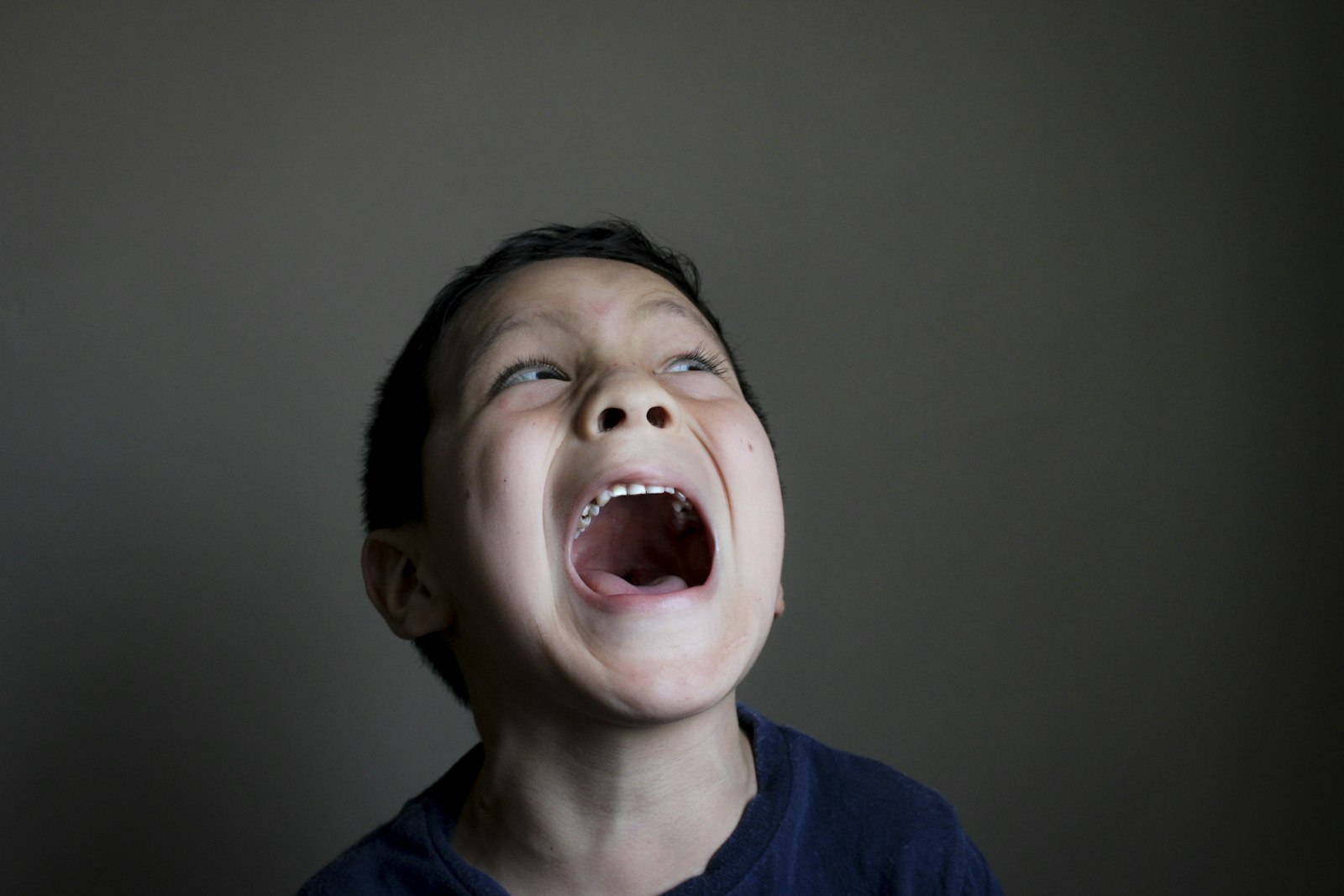
How to Calm an Angry Child Without Losing Your Own Temper
Parenting an angry child is one of the most demanding things you can do. The emotion is loud, it is directed at you, and it triggers your own stress response in ways that other parenting challenges don’t. Here is how to handle it in a way that actually helps — and that keeps you from becoming part of the problem.
Understanding What Anger Is Doing
Children experience genuine anger. It is not something to fear or eliminate — it is an emotion with important information. Anger usually signals that a limit has been crossed, that something felt unfair, or that the child feels unheard or out of control.
The behaviour that accompanies anger — the yelling, hitting, throwing, door-slamming — is the problem. The anger itself is not. This distinction matters because the goal is not to suppress anger. It is to help your child learn to express it in ways that are not destructive.
What Anger Often Hides
Anger is rarely just anger. Underneath it, in most children, is something softer — disappointment, hurt, embarrassment, fear, or a sense of being treated unfairly. Anger is loud and confident, which is part of why it gets used. The softer feeling underneath it is more vulnerable and harder to express.
This matters because if you only respond to the anger on the surface, you miss the actual driver. The child who is yelling about screen time may be more upset about being told what to do in front of a sibling than about the screen itself. The one who explodes over homework may be quietly humiliated by how hard they are finding it. Once the anger has come down, a curious question about what was underneath — gently, without making them defend their explosion — often surfaces something useful. “It seemed like there was something else going on for you. Was there?” Asked when the moment has passed, this opens up the conversation that the anger was hiding.
Your State Is the Most Important Variable
When your child is angry, your own physiological state is the most important factor in what happens next. An escalating parent produces an escalating child. A calm parent gives the child’s nervous system something to anchor to.
This is not fair. You are the adult, managing your own stress load, being shouted at by a small person. Staying regulated in that moment is genuinely hard. But it is also the most leveraged thing you can do. Before you say or do anything, take one slow breath and consciously lower your voice.
What to Say — and What Not to Say
“Calm down” does not work. It is physiologically impossible to calm down on command when the stress response is active, and hearing “calm down” during a rage state typically makes children angrier. Remove it from your vocabulary in these moments.
What does work: naming the feeling without judgment. “You are furious right now.” “I can see how angry you are.” This is not agreement with the behaviour — it is acknowledgement of the emotional state. Named feelings reduce in intensity faster than unnamed ones.
After naming, stop talking. Silence while your child is still in the peak of anger is more effective than any continued instruction or reasoning. The thinking brain is offline. Wait for it to come back online before you try to engage it.
When Their Anger Is About You
Some of the hardest moments are when the anger is directed squarely at you — your decision, your rule, your tone, your existence. The instinct is to defend yourself, justify the decision, or escalate to assert authority. None of these tend to help.
What helps is separating the relationship from the rule. The decision can stand. “The answer is still no.” But the relationship is not under threat. “You’re allowed to be angry with me about this. I still love you.” Said calmly, this gives the child permission to have the feeling without it becoming a war over the underlying decision. Many children, told that their anger is not a problem in itself, drop the volume considerably within a few minutes.
When They Are Calmer: Address the Behaviour
Once your child has returned to a regulated state — which you will see in their body language, their breathing, and whether they can make eye contact — that is when you address the behaviour. Not before.
“You were really angry before. I get that. But throwing the book is not okay. We do not do that.” Brief, calm, specific. Not a lecture. Then the forward-facing question: “What could you do next time when you feel that angry?”
Building Anger Management Skills Between Episodes
The best time to teach anger management is not during anger. It is when your child is calm, engaged, and available. Practice specific strategies together — a slow breathing technique, a physical outlet like jumping or going outside, a signal word that means “I need space before I explode.” Rehearsed strategies are available in the moment. Strategies introduced during a rage are not.
Also build their emotional vocabulary specifically around anger. There is a difference between irritated, frustrated, annoyed, furious, and enraged — and a child who can name the gradient has more capacity to catch it early and intervene before it peaks.
Watch for Repeating Triggers
If the same situation keeps producing the same explosion — the morning routine, the transition off screens, the moment a sibling enters the room — the issue is usually not the child’s anger. It is the situation. Anger that recurs in a predictable pattern is information about a system that is not working, and the most effective intervention is usually upstream of the anger itself. Earlier preparation, a different transition, a structural change to the routine. The pattern often disappears once the underlying friction is removed.
Model the Behaviour You’re Asking For
Children learn anger management more from what they watch than from what they are told. If you lose your temper regularly, apologise for it, and return to calm, you are modelling the full cycle of a healthy anger response — not a perfect one, a real one. If you yell and never acknowledge it, the modelling is also clear, and much less useful.
This is not a request to be a flawless parent. It is an observation that your child is watching closely, and that the repair is often more instructive than the avoidance. A parent who says “I was too sharp with you before, I’m sorry — I was tired and it came out wrong” is teaching a skill most adults never fully learn. Done consistently, this changes what your child believes anger has to look like in close relationships. Over the years, that quietly becomes one of the most valuable things they take from being raised in your house.
Your Practical Takeaway
This week, practice one thing: stop saying “calm down.” Replace it with one observation sentence: “You are really angry right now.” That is it. Use it consistently for a week and notice whether the arc of the anger episode changes when you name it rather than instruct it.
Frequently Asked Questions
How do I calm an angry child when I am also angry?
The honest answer is that you manage your own state first. Even a brief pause — one slow breath, shoulders deliberately dropped — gives your nervous system enough of a reset to prevent escalation. You do not need to feel calm. You need to act calm long enough for your child’s system to borrow from yours.
Why does staying calm when my child is angry feel so hard?
Because your nervous system is designed to mirror the emotional state of people around you. When your child is angry, your body is receiving threat signals and responding accordingly. This is biological, not a parenting failure. The goal is not to eliminate that response — it is to act in spite of it.
What is the most effective thing to say to an angry child?
One short, calm sentence that names what you see: “You are really angry right now.” Nothing more. No explanation, no consequence, no reasoning. That one sentence — delivered without edge — tells the child their state has been noticed by someone who is staying calm. That experience is what brings the anger down.
Should I give consequences during or after the anger?
After — always. Consequences delivered during the peak of anger add fuel to an already active stress response. Wait until the child is fully calm. Then, if a consequence is appropriate, deliver it briefly and without revisiting the original incident in detail.
How do I calm an angry child who refuses to engage?
Stop trying to engage. Presence without pressure is the most effective tool with a child who has shut down or is actively refusing contact. Stay in the room, stay calm, say nothing. When the anger runs its course — which it will — the child will signal readiness to reconnect. That is the moment to move.
At what point should I be worried about my child’s anger?
Seek professional support if your child’s anger is resulting in physical harm to themselves or others, happening multiple times daily and significantly affecting family life, or not responding at all to consistent calm approaches over several months. Occasional intense anger in primary school children is developmentally normal — a persistent pattern that is escalating over time is worth investigating.
For personalised guidance based on your child’s specific anger triggers, try Cleo free at lifereadyparenting.com/ask-cleo.