
How do you adapt and thrive when the future of work keeps changing underneath you? And more importantly, how do you raise a child who can do the same?
Adaptability is not a personality trait that some people are born with and others are not. It is a capability that develops through experience, through the environment you create, and through the habits built over years. The primary school years are when the foundation is laid.
Why Adaptability Is the Most Important Career Skill of This Era
In previous generations, a person might enter a career in their twenties and work within essentially the same structure for forty years. The skills they developed early remained relevant throughout. That model is increasingly historical.
The World Economic Forum projects that the half-life of professional skills will continue to shorten as AI accelerates the pace of change across every industry. The average person will need to substantially reskill multiple times over their working life. The people who navigate this successfully are not those who were trained most thoroughly for their first career. They are those who know how to learn new things efficiently when circumstances demand it.
A child who develops genuine adaptability during the primary school years has the most durable career advantage available. Not a specific skill set, not a prestigious qualification, but the capacity to keep learning and contributing genuine value across whatever changes come.
What Adaptability Actually Looks Like in a Child
Adaptability in a primary school child is not about tolerating change cheerfully or bouncing back quickly from setbacks, though those are part of it. At its core, adaptability is the combination of three things.
Genuine curiosity. A child who is genuinely curious about how things work, who asks real questions and actually wants to know the answers, who finds new domains interesting rather than threatening, is building the internal orientation that makes continuous learning natural rather than effortful.
Comfort with not-yet-knowing. A child who has learned that not knowing something is simply a temporary state, rather than a source of shame, is able to engage with new challenges without the anxiety that shuts down learning. This is built through how parents respond when their child does not know something or gets something wrong.
The experience of learning something genuinely difficult. A child who has successfully learned something hard, who has been through the discomfort of not understanding and come out the other side with genuine capability, has proof of their own ability to learn. That proof is the foundation of adaptability.
How to Build Adaptability at Home
Model continuous learning yourself. Talk about things you are figuring out, questions you are genuinely exploring, skills you are working on. Show your child that learning is a lifelong activity that adults engage in willingly, not a burden that ends when school does. This is the single most powerful thing you can do.
Respond to failure as information, not as judgment. When your child fails at something, help them analyse what happened and what they would try differently, rather than consoling them away from the experience or, at the other extreme, criticising the outcome. The message you want them to internalise is: failure tells you what to try next.
Expose them to varied experiences deliberately. Children who only encounter familiar domains develop comfort but not adaptability. Exposure to varied activities, disciplines, cultures, and ways of thinking builds the flexible mental models that allow quick learning in new contexts.
Let them struggle productively. Productive struggle is the experience of encountering genuine difficulty that is within your capacity to eventually overcome. It is the precursor to real learning. The parental instinct to remove difficulty is understandable and sometimes appropriate, but consistently doing so deprives children of the very experiences that build adaptability.
Encourage genuine mastery over surface exposure. A child who has gone genuinely deep in one or two areas has developed the experience of sustained effort and real achievement. This transfers. The child who has experienced becoming genuinely good at something difficult knows, at a felt level, that they can learn hard things. That knowledge is more valuable than any specific skill.
The Role of Technology in Adaptability
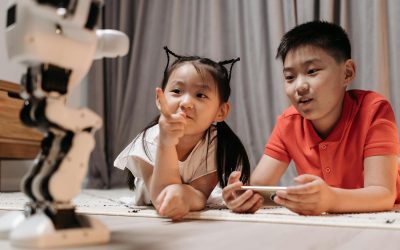
Adaptability in the AI era includes a specific dimension: the ability to work effectively alongside technology rather than in competition with it. A child who understands how AI tools work, who can use them to amplify their own capabilities, and who can evaluate their outputs critically, is not threatened by AI. They are equipped to use it.
This is not about teaching your child to use specific apps or platforms, which will change. It is about developing a comfort with technology as a tool, a critical eye for evaluating what it produces, and the confidence to use it purposefully rather than passively.
Frequently Asked Questions
My child seems resistant to trying new things. How do I build adaptability in them?
Start small and low-stakes. The goal is not to force them into uncomfortable situations but to build a track record of small successful encounters with novelty and challenge. Each small experience of trying something new and being okay compounds into a broader comfort with newness over time. Pressure and criticism have the opposite effect.
Is adaptability more important than specific academic skills?
Both matter, but adaptability is what allows specific skills to remain useful across a changing landscape. Academic skills in a rigid learner become obsolete when the context changes. The same skills in an adaptable learner become a foundation for continued growth. Develop both, but do not sacrifice adaptability for narrow academic performance.
The Complete Guide
For the full picture of raising a future-ready child: How to Future-Proof Your Child: The Complete Guide for Parents
Talk to Cleo for personalised guidance on your specific child. Talk to Cleo free
Related reading: