
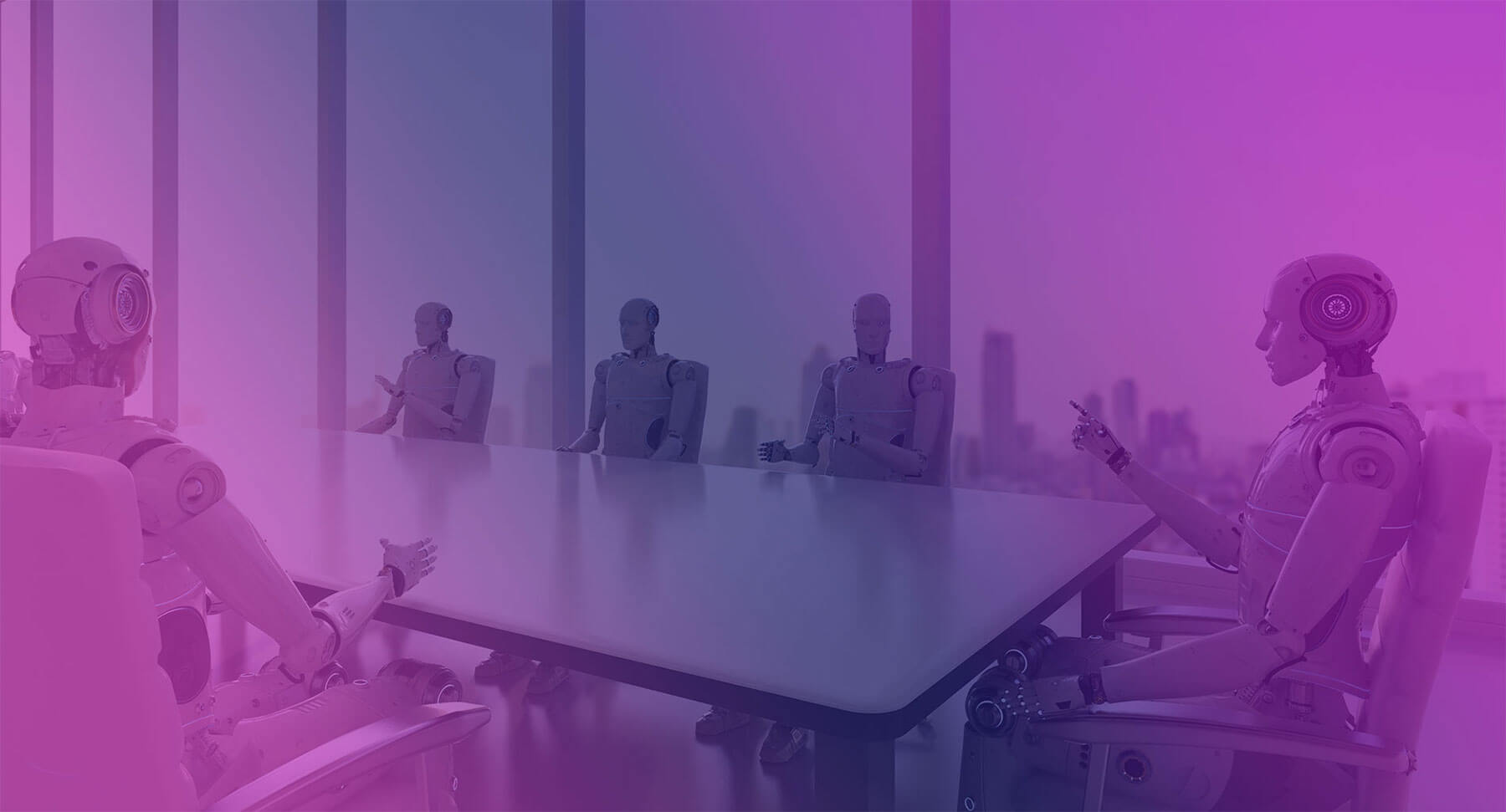
The question of whether careers will be replaced by AI by 2030 has shifted from speculation to observable reality. Roles that seemed secure five years ago are already being restructured. The question for parents is not whether this is happening but what it means for the children who will enter the workforce in the next decade.
This article covers what the research actually shows, which careers are most at risk, which are most resilient, and what parents can do now to position their children well for whatever comes next.
What the Research Shows About AI and Career Displacement
The most cited research on AI and job displacement comes from several serious institutions, and the numbers vary significantly depending on their assumptions. McKinsey Global Institute projects that between 75 million and 375 million workers may need to change occupational categories by 2030. The World Economic Forum’s Future of Jobs Report suggests 85 million jobs will be displaced while 97 million new roles emerge. Oxford University’s 2013 study suggested 47 percent of US jobs were at high risk of automation.
The range is wide because AI adoption depends on economic, regulatory, and social decisions, not just technical capability. But across all serious research, the direction is consistent: automation will displace a significant number of current roles while creating different ones.
The key insight for parents is this: the new roles being created require a different set of capabilities than the roles being displaced. Routine, rule-based, predictable tasks are being automated. Roles requiring genuine human judgment, creativity, emotional intelligence, and adaptability are growing in value.
Which Careers Are Most at Risk?
The careers at highest risk of significant automation by 2030 to 2040 share common characteristics. They involve processing predictable information according to defined rules, making decisions in situations where the parameters are well understood, or performing routine physical tasks in structured environments.
High-risk categories include data processing and entry roles, basic accounting and bookkeeping functions, routine customer service and support, standard legal document preparation, basic medical diagnostics from imaging data, manufacturing assembly in structured environments, and logistics coordination for defined routes and schedules.
This does not mean these professions will disappear entirely. It means the number of humans required to perform them will decrease significantly, and the humans who remain will be those performing the parts of the role that require genuine judgment and human connection.
Which Careers Are Most Resilient?
The careers most resilient to automation share a different set of characteristics. They require genuine human judgment in genuinely ambiguous situations, authentic emotional connection that people need from other people rather than from machines, physical dexterity in genuinely unpredictable environments, or original creative thinking that goes beyond recombining existing patterns.
Resilient categories include healthcare roles involving direct therapeutic relationships, skilled trades requiring adaptive physical work in varied environments, education and counselling where the human relationship is the product, creative direction and original design work, complex leadership and management, and any role where the primary value is genuine human connection and judgment.
Even within these categories, the AI-resilient version of the role is different from the current version. The nurse of 2035 will use AI diagnostic tools routinely. The teacher of 2035 will use AI tutoring systems for individualised instruction. What will remain distinctively human is the relationship, the judgment, the care.
What This Means for Your Child
Your child will enter the workforce around 2035 to 2045. The AI landscape that far out is genuinely uncertain in its specifics. What is not uncertain is the direction: human capabilities that are difficult to automate will become more valuable, not less, as AI handles more of the routine work.
The most durable strategy for parents is not to aim their children at a specific career that seems safe today. It is to build the underlying human capabilities that translate across careers, that allow adaptation to whatever the specific jobs of 2040 look like.
Those capabilities are consistent across all serious research: critical thinking, genuine creativity, emotional intelligence, adaptability and continuous learning, and complex judgment in ambiguous situations.
A child who has genuinely developed these capabilities is not threatened by AI disruption. They are positioned to use AI as a powerful tool while contributing the distinctively human value that machines cannot provide.
How to Build These Capabilities at Home
The capabilities that matter most for the future are not primarily built at school. They are built through the quality of your parenting and the environment you create at home.
Build critical thinking through conversation. Ask your child to explain their reasoning, not just their conclusions. When they make a claim, ask how they know. When they face a decision, ask them to walk you through their thinking. Reward good reasoning, not just right answers.
Build creativity through unstructured time. Protect time that is genuinely unscheduled. Boredom is the precursor to creativity. A child whose attention is always occupied never develops the internal resources that self-directed creative thinking requires.
Build resilience through graduated challenge. Let your child encounter difficulty that is within their capacity to handle. When they fail, help them analyse what happened and what they would try differently. The experience of struggling and recovering is how resilience is built.
Build adaptability through genuine curiosity. Model continuous learning yourself. Talk about things you are learning, questions you are exploring. Show your child that learning is a lifelong activity, not something that ends with formal schooling.
Build emotional intelligence through direct conversation about feelings. Talk about emotions directly and without judgment. Help your child develop emotional vocabulary. Give them real opportunities to take responsibility for how their actions affect other people.
Frequently Asked Questions
Should I discourage my child from pursuing a career that seems at risk?
Not necessarily. Even high-risk careers will retain human roles for the foreseeable future, and the landscape 15 to 20 years out is genuinely uncertain. A better approach is to ensure your child develops the foundational human capabilities that allow them to adapt, regardless of which specific career they pursue.
Is any career completely safe from AI?
No career is entirely immune from some degree of AI impact over the next two decades. The question is not safety from AI but resilience to it. How much of the role involves distinctively human capabilities that AI cannot replicate?
How do I talk to my child about this without causing anxiety?
Focus on capability, not threat. The message your child needs is not that machines might take their future, but that the humans who will do best are those with strong foundational capabilities. That is something they can build. That framing is empowering rather than frightening.
The Next Step
For the complete guide to building the capabilities that matter most, with practical guidance for each age group:
How to Future-Proof Your Child: The Complete Guide for Parents
Or talk to Cleo for personalised guidance on your specific child. Talk to Cleo free
Related reading: