
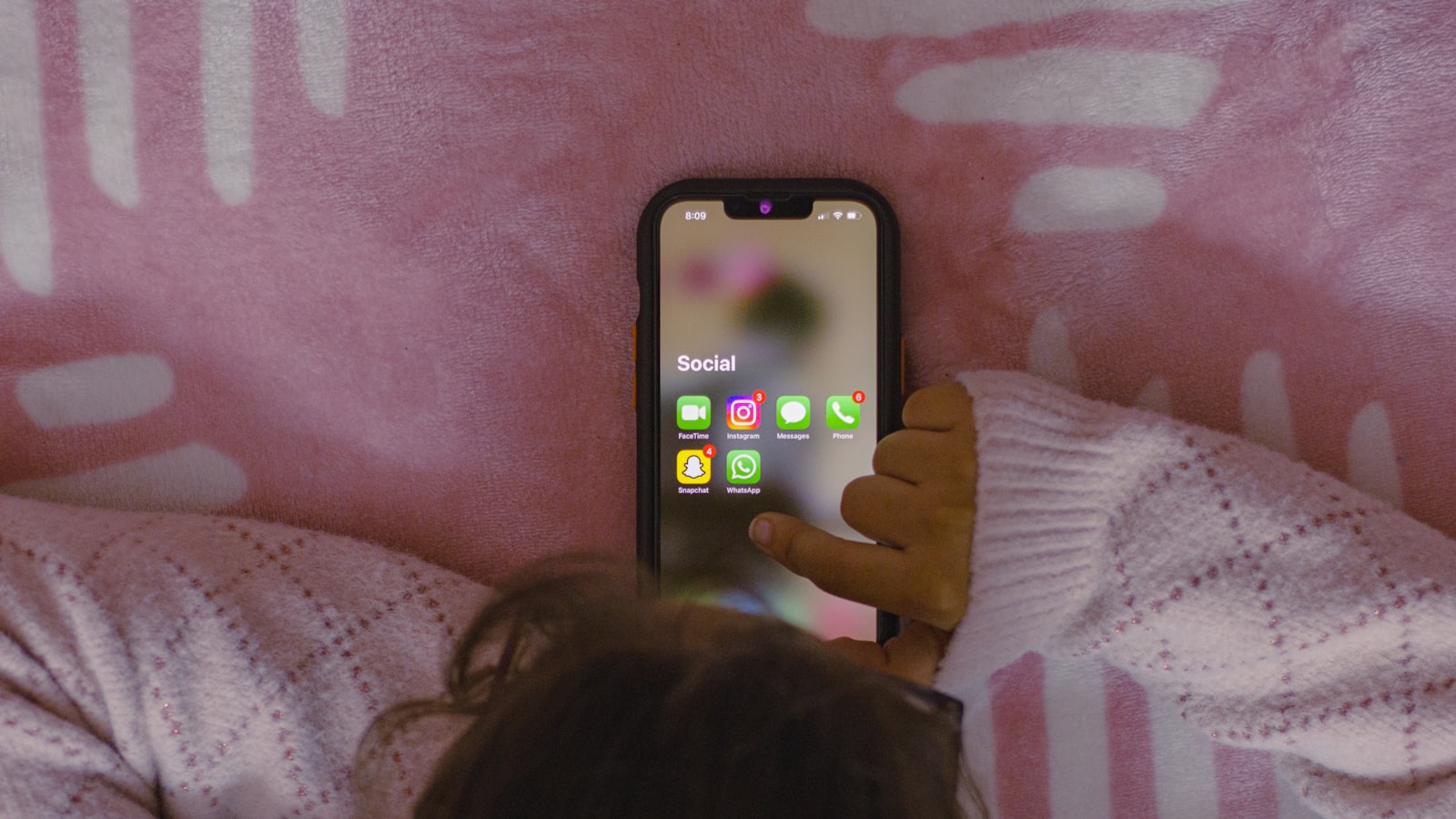
The conversations your family is missing are not the big ones. They are the small ones. The throwaway question on the way to school. The unprompted story over breakfast. The strange thing your child noticed in the back garden that they would have told you about if you had both been looking up.
These are the conversations that build a childhood. And they are the ones that quietly disappear first when devices become a constant presence at home.
The conversations parents grieve without realising
Most parents do not consciously notice when family conversations thin out. The shift happens slowly. A few less words at breakfast. A car ride that used to fill with chat now spent in silence with everyone on a phone. The bedtime story that started getting cut short. None of these moments feel like a loss when they happen. The loss only becomes visible months later, when a parent realises they no longer know what their child is interested in.
The conversations you have probably stopped having are these.
The car ride conversation
The car has always been one of the best places for children to talk. Side by side, no eye contact required, low stakes, hands free. Children who will not tell you anything across the dinner table will tell you everything in the car. When the car ride is filled with a phone or tablet, this entire channel of communication closes.
The dinner table conversation
Even with a short meal, the dinner table is supposed to be the place where everyone catches up. What happened at school. What happened at work. The funny thing the dog did. The plan for the weekend. None of this happens with devices on the table.
The bedtime conversation
Bedtime is one of the few times children speak honestly about their inner world. The lights are low. The day is over. They are tired enough to drop their guard. Children who have spent the half-hour before bed scrolling are not in this state. They are wound up, slightly dysregulated, and ready for sleep, not connection.
The “tell me about your day” conversation
Children almost never volunteer what is going on for them. The information comes out sideways. Through a comment about something else. Through a question they ask out of nowhere. Through a story about a friend that is really about them. These sideways moments require space. Devices fill the space.
The morning conversation
The first half-hour of the day used to be a quiet calibration. A child would shuffle into the kitchen, eat something, mumble a few words, slowly come into focus. The whole tone of their day got set there. With devices, the morning has become a content session before school. Whatever was going to come out in conversation does not.
What family conversations are being lost
The cumulative effect is not always visible at age seven or nine. It shows up in slow ways.
Children learn to talk by talking. They learn vocabulary, humour, listening skills, and how to read social cues by being in conversations with adults who love them. When the conversations thin out, the learning thins out with them. A child who has had thousands of small conversations with their parents is more articulate at twelve than a child who has had hundreds.
Beyond the developmental work, there is the relational work. Children form their sense of being known and loved through being talked to and listened to. The parent who knows what their child is reading, what their child finds funny, what their child is worried about, has built that knowledge through hundreds of small conversations. Without those conversations, the parent ends up knowing their child less well, and the child ends up feeling less known.
How to reclaim one conversation
You do not need to fix all the missing conversations at once. Pick one and protect it.
Pick the car ride or the dinner table
These are the two highest-leverage conversations in a typical family week. Both are recurring, both are short enough to make screen-free without disrupting your life, and both are where the most natural conversation happens when devices are out of the way.
Make it screen-free for everyone, including you
The rule applies to the parent too. If you are looking at your phone in the car, your child has no reason to talk to you. If you are checking email at the dinner table, the table has not really been reclaimed. Phones away. For everyone.
Have one easy question ready
The first few times you reclaim a conversation, the silence will feel awkward. Have one open question ready that you can ask if it does. Not “how was school” because that gets answered with “fine.” Try something like “what was the funniest thing that happened today?” or “what did you do at lunch?” or “what’s something you learned today that nobody else might know?”
Use the same question for a week or two if it is working. Children respond well to small repeated rituals.
Listen more than you respond
The biggest mistake parents make in reclaimed conversations is filling the space too quickly. Your child says one sentence, and you respond with three. Try to leave more space than feels comfortable. Children often take a long pause before saying the thing that actually matters. The pause is where the real conversation lives.
What changes when one conversation comes back
Within a week or two of protecting one conversation, parents usually notice three things.
The child says more. Not all at once. But by the second week, the conversation that used to be a few words has stretched into something longer.
The parent learns something. Often something small that they did not know about. A friend’s name. A worry about something at school. A thing that happened weeks ago that the child never had a chance to mention.
The relationship feels different. Not dramatically. Quietly. The child seems slightly more relaxed in the parent’s company. The parent feels slightly more like they know what is going on.
This is what reclaiming looks like. One protected conversation a day, building over weeks, into a different family rhythm.
The bigger picture of why this work matters is in the Let’s Get Them Back manifesto. The full set of tools sits in the Complete Guide to Screen Time.
Frequently Asked Questions
Why has my family stopped talking?
Most families do not consciously stop talking. The conversation thins out slowly as devices fill more of the in-between moments. The good news is that the conversation comes back quickly when one moment is reclaimed and protected.
What conversations matter most?
The car ride and the dinner table are the two highest-leverage conversations in most families. Bedtime is third. These are the moments where children naturally talk if the space is protected.
How do I get my child to talk to me?
Make a screen-free moment, ask one open question, then leave more space than feels comfortable. Children often pause before saying the thing that matters. The pause is where the real conversation happens.
What questions should I ask my child?
Try open questions that cannot be answered with one word. “What was the funniest thing that happened today?” “What did you do at lunch?” “What’s something you learned that nobody else might know?” Use the same question for a week or two if it is working.
How long does it take for family conversations to come back?
Most families notice a real difference within one to two weeks of protecting one screen-free conversation a day. The change compounds from there.
What if my child says nothing?
Silence is fine in the early days. Do not fill it. Sit with it. By the third or fourth screen-free car ride or dinner, the child will start filling the space themselves. The work is patience, not pressure.
Talk to Cleo
Get a plan to reclaim family conversations. Free, no sign up.