
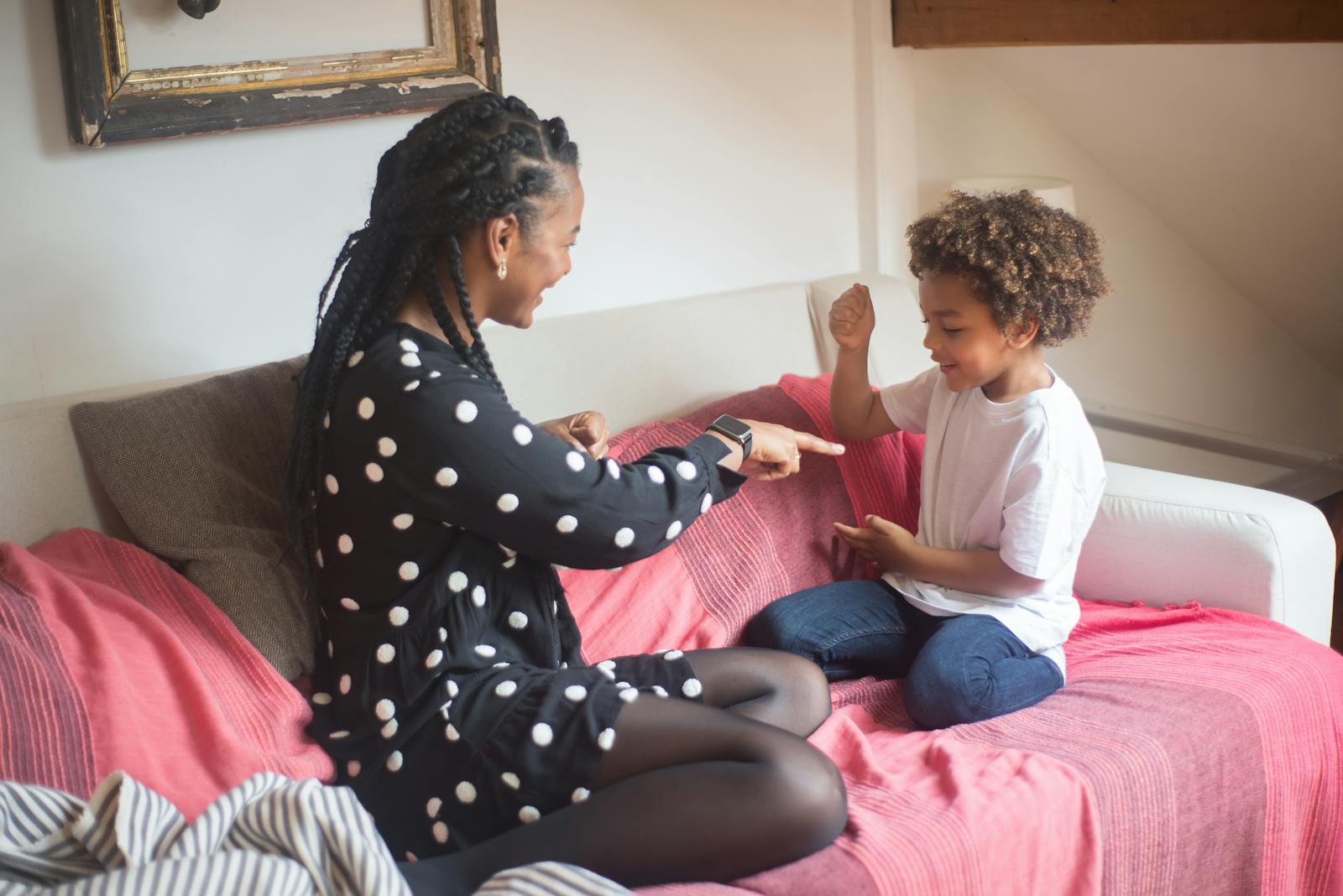
Knowing how to talk to your child about screen time is half the battle. Most screen time conversations fail before they start. The parent waits for a calm moment that never quite comes, so they end up having the talk in the car during school pickup, or at dinner while the child is hungry and distracted, or worse, mid-meltdown when the child’s device has just been taken away. The conversation becomes a lecture. The child shuts down. Nothing changes.
The ones that work do not happen by accident. They happen because the parent scheduled them for a specific moment, kept them short, and opened with genuine curiosity instead of a predetermined speech. The goal is not to convince the child you are right. The goal is to name what is going to happen next, calmly and clearly.
## Why most screen time conversations go sideways
A screen time conversation goes sideways for one of three reasons: the parent has it at the wrong time, in the wrong setting, or with the wrong approach.
The wrong time is always when emotions are high. This means never during a screen-time meltdown, never when the child is mid-game, never when you are angry.
The wrong setting is anywhere the child feels trapped or on display. The best conversations happen when there is a natural way out and a moving activity. A walk is better than the dinner table.
The wrong approach is the lecture. The parent opens with the problem: “We need to talk about your screen time.” The child hears: “I am about to tell you why you are wrong.” The approach that works opens with curiosity, listens first, and then names the next step.
Here’s how to talk to your child about screen time.
## Choose the right moment and setting
The timing and setting matter more than the script. Get these right and even a slightly clumsy conversation lands.
The best moments are the ones where you are doing something else together. Driving to somewhere the child wants to go. Walking the dog. Cooking together.
Avoid anywhere the child feels trapped. Do not back them into a corner. The worst times are always emotional moments.
Pick your moment on purpose. Say something like: “I want to chat about screens sometime soon. When would be a good time for you?”
## How to talk to your child about screen time: the three-part structure
The conversation has three parts. None of them is a lecture.
The first part is listening. You ask one or two genuine questions and actually hear what your child has to say. “What is happening with screens at your place right now?” or “How do you feel about the way things are going?”
The second part is naming what you are seeing. “I have noticed you are hooked on that game and it is hard for you to step away.” Just observation, no blame.
The third part is naming what comes next. “Here is what we are going to do differently starting Monday.” You are not asking permission. You are telling them calmly what the new situation is.
All three parts should take under ten minutes. If it is longer, you have slipped into lecture mode.
## What to say to kids aged five to seven
Young kids this age are concrete thinkers. You need to name the specific thing you see, say exactly what is going to change, and keep it short.
Open with: “I have noticed screens are happening a lot at our place, and it is making it hard to get ready for bed on time.”
Then move straight to the plan: “Starting tomorrow, screens are off at 4:30. Then we make a snack together. That is the plan.”
Do not explain why. Do not ask how they feel about it. Just tell them.
## What to say to kids aged eight to ten
Start with genuine curiosity: “Tell me about the games you are playing right now. What is keeping you hooked?” Then listen.
Then name what you are seeing: “It sounds like you really love that game. Here is what I am noticing: once you start playing, it is really hard for you to come off when it is time.”
Then the plan: “So here is what we are going to do. Screens start at 4pm and finish at 5pm. You will get a ten-minute warning and a five-minute warning.” For the full breakdown of how to build that plan, see our guide to screen time limits that work. And if your child is around eight, our guide to screen time rules for 8 year olds covers what works at that specific age.
If they say “but my friends get more”: “I am not making rules for your friends. I am making rules for our house.”
## What to say to kids aged eleven and up
Start with real listening: “How do you think things are going with screens right now?” and actually hear what they say.
Acknowledge the legitimate part: “You are right that you have got more independence now.”
Then name the thing you are observing: “What I am also seeing is that once you get hooked on something, the notifications keep coming and it is harder and harder to put down. That is not a character flaw. That is how the platforms are designed.”
Then the plan, stated plainly: “Here is what is going to change. We are setting an end time for screens on school nights. And that is not a debate. But I want to hear what you think the end time should be.”
## Handling the “but my friends get more” response
This will come up. Almost every kid says it. The response is simple.
“I am not parenting your friends. I am parenting you. In this family, this is the rule.”
That is the full response. Do not add reasons. Do not explain why you know better. Just state the fact and move on. If they push, repeat the same line exactly.
## What to do if they shut down
If a child shuts down, stop talking. Say: “I can see this is hard to talk about right now. We can finish this conversation later. Here is the thing you need to know: starting Monday, screens are off at [time].”
Then drop it. Come back to the conversation later, preferably one-on-one in a different moment.
## The one thing never to say
Never, ever say “I am disappointed in you” in a screen time conversation. This language moves the conversation away from the behaviour and into the child’s identity. You can say: “I am concerned about how much this is pulling your attention.” That is about behaviour. Keep your disappointment language out of screen time conversations.
## FAQ
**At what age should I even have this conversation?**
Once a child is old enough to use screens regularly, they are old enough to hear that there are limits. The words change, but the structure does not.
**What if my child just agrees to everything and then ignores the plan?**
That is normal. Agreeing is not the same as accepting. If they ignore the plan, follow through on the consequence you agreed to. Do not have the conversation again. Just implement the plan and stay consistent.
**Should I have the same conversation with both my kids?**
Yes, but separately. Each child is different. Separate conversations are more effective.
**What if I have already had a bad conversation about this?**
You can start over. Say something like: “That conversation did not go the way I wanted it to. Can we try again?” and pick a better moment.
For a complete walkthrough of how screen time affects primary school kids, see our screen time guide for primary school kids.
If you want help thinking through what the actual plan should look like for your family, or you want a tailored conversation script for your child’s specific age and personality, chat with Cleo. Cleo is a free screen time specialist who will ask you what is actually happening at your place and walk you through how to set it up. Find her at [lifereadyparenting.com/ask-cleo](https://lifereadyparenting.com/ask-cleo).